A Landmark for Women’s History: 10th-Century Gospel to Sell at Christie’s
- by Announcement, Rare Book Hub staff
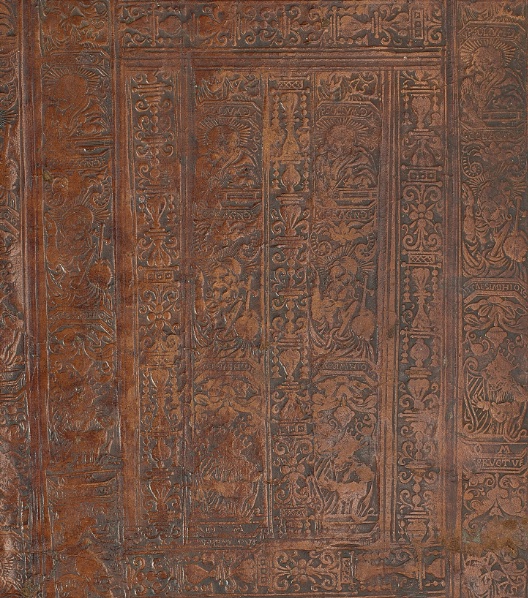
A midieval manuscript attributed to a women's convent circa 900
Fewer than ten Latin Gospels of the 10th century or earlier have been offered at auction in the past hundred years—and none have been connected to a women’s scriptorium. That changes this December, when Christie’s London presents a remarkable early medieval Gospel believed to have been written by a community of women around the year 900.
The manuscript, a rare survival from the dawn of the 10th century, is expected to bring £700,000 to £1,000,000 (about $880,000 to $1.3 million) when it appears in the Valuable Books and Manuscripts sale on December 10. It is a leading highlight of the auction, which also features William Harvey’s 1628 medical landmark Exercitatio anatomica de motu cordis et sanguinis in animalibus—the first modern description of blood circulation—and selections from the Royal Society of Medicine Library.
A Landmark of Women’s Cultural History
Christie’s believes the Gospel was produced at or for Essen Abbey, a women’s religious foundation in the Rhineland whose canonesses—noblewomen devoted to faith and learning—maintained their own scriptorium. The abbey’s independence allowed its members to write and copy sacred texts at a time when most scriptoria were male-dominated.
The manuscript offers material evidence that women in the Carolingian and Ottonian world engaged directly in the copying and preservation of Scripture, expanding our understanding of female participation in medieval intellectual life.
Written by the Hands of Women
The manuscript, written in elegant Carolingian minuscule, shows at least two scribal hands, suggesting collaboration among members of a single community. Its text includes prayers “for the veiling of handmaidens of God,” language tied to female religious houses.
Containing the four Gospels—Matthew, Mark, Luke, and John—along with votive masses, the manuscript is written on vellum and bound in an early 16th-century German blind-stamped calf binding. It survives in excellent condition with wide margins and clean script, with nail-holes along the edges of the first flyleaf suggesting it may once have had a treasure binding.
After the dissolution of Essen Abbey in 1803, the manuscript entered the collection of the theologian August Friedrich Christian Vilmar of Marburg. It later appeared in a Frankfurt sale in 1869, but remained largely unstudied until recent research brought its importance to light.
A Market Rarity and a Scholarly Revelation
Only a handful of early Gospels have appeared at auction in the past century, and none with a clear link to women’s authorship. The closest comparison, the 9th-century Gospels of Queen Theutberga, sold at Christie’s in 2015 for nearly £2 million.
With its early date, fine preservation, and historic connection to a female scriptorium, the Essen Gospel stands as one of the most significant medieval manuscripts to reach the market in decades.
For further details, visit the Christie’s catalogue
https://www.christies.com/en/lot/lot-10th-century-gospels-6563952/