The Word of the Day Is...
- by Michael Stillman
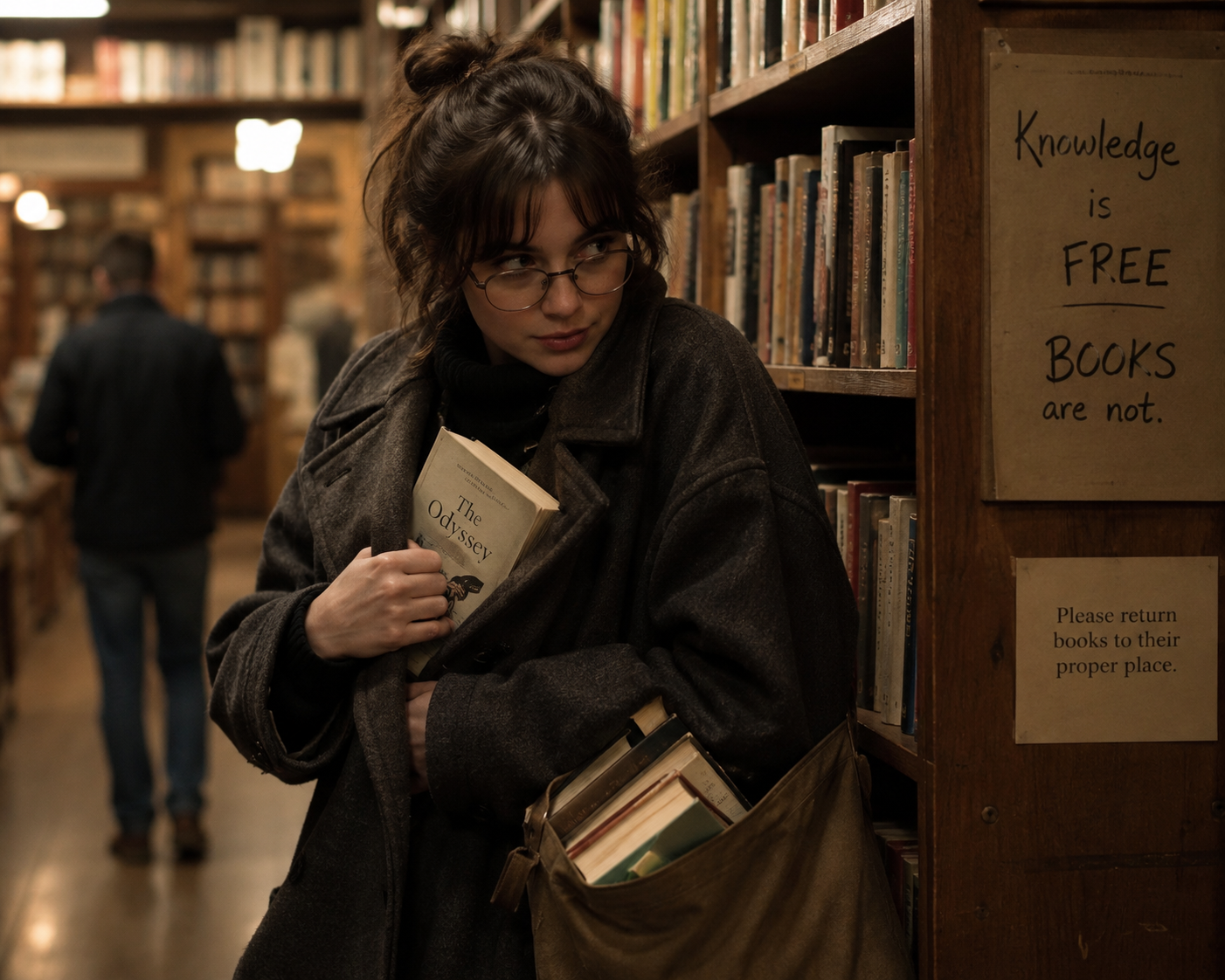
A biblioklepto (courtesy of ChatGPT).
The Economic Times has a feature where they publish the Word of the Day. The Economic Times is based in India, but after two centuries of British rule, they know the language fairly well. Their selections for the Word of the Day indicate they know the language better than I. I don't know most of their Words of the Day, never even heard of them. Maybe the Indians learned the language better than we did.
Some of their recent Words of the Day were xenodochial, vellichor, cockalorum, gobemouche, circumambient, pandiculation, and blatherskit. I have been speaking English longer than 90%-plus of the world's English-speakers yet I have no idea what any of them means. Spellcheck evidently doesn't either, as it marked every one of them as a misspelling. The Economic Times must have some kind of vocabulary. I hope they have the good sense not to use them in their articles other than Word of the Day.
Recently, they had a Word of the Day whose meaning I instantly recognized, despite it containing eight syllables and 17 characters. I don't know that I've ever seen it before, but those of us involved with books will understand it immediately. I bet you will too. The word is “bibliokleptomania.”
Merriam-Webster defines this ungainly long word briefly: “kleptomania involving an uncontrollable impulse to steal books.” In a more detailed description, The Economic Times says, “The dramatic, tongue-twisting term describes an obsessive urge to steal books, not necessarily for profit, but out of an overwhelming emotional attachment to them. The word captures a curious intersection of passion, compulsion and literary fascination...”
The greatest example in America was Stephen Blumberg from Iowa. He stole something like 23,600 books from over 268 libraries across 45 states and two Canadian provinces. They were valued at $5.3 million in 1990. He was sentenced to 71 months in prison and a $200,000 fine. He didn't need the money and never sold any of them. He believed he was protecting the books. An insanity defense did not save him, though he evidently suffered from some sort of mental illness. Thomas Frognall Dibdin described it as “bibliomania.” Apparently, bibliokleptomania is not considered a serious enough form of insanity to get you off.
If you operate a bookstore, you may have encountered a bibliokleptomaniac (this word extends the letter count to 18). Librarians know them too. They may even have lists of those to watch out for. Blumberg was an extreme example, but small-time players, perhaps interested only for a small personal collection, are out there too. Those involved with books celebrate people with a fierce love of books, and Blumberg would qualify, but it needs to be tempered by respect for the law. Lending and borrowing imply returning. If you want to keep 'em, you need to pay for 'em.