Who Is Suddenly Buying Large Numbers of Old Books?
- by Michael Stillman
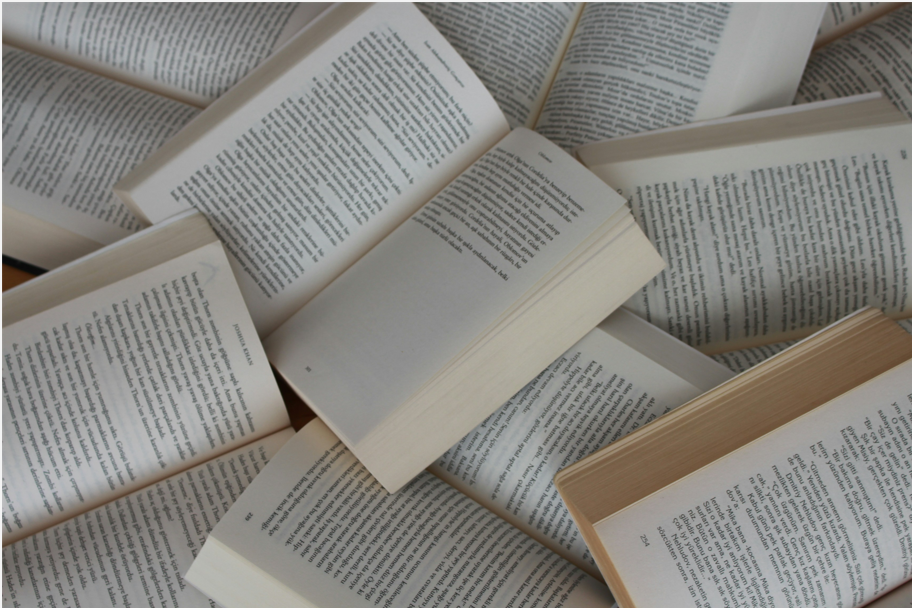
Waiting to be turned into "AI slop."
European used book sellers have noticed a strange trend recently. Buyers come in and purchase large quantities of their old books, sometimes hundreds at a time. What was particularly odd is that there seemed to be no rhyme or reason to their purchases. The books' subjects were all over the place, with little in common other than the focus was on nonfiction. The topics were too varied for the books to fit any logical collection, nor the interest of any researcher. Most were shipped to buyers in America or Canada. What was going on?
While the selling bookshops have mainly remained mum because of non-disclosure agreements, observers came to a conclusion as to who the buyers must be. Either directly or indirectly, the users seem to be AI (artificial intelligence) companies. They have wanted millions of old books to help "train" their software, that is, to provide answers to the many questions users ask. Books are the logical source of enormous amounts of such data, generally free from the strange opinions and downright lies that can be found on the internet.
The practice of using old books to train AI models was revealed in a document filed in a lawsuit by publishers and authors against Anthropic. Anthropic created the Claude AI platform. Anthropic was accused of stealing their work without compensation. One claim involved books that had been "stolen," that is, illegally copied by pirate websites like LibGen. They would steal digital copies of millions of books without paying for them. Anthropic then used these illegally obtained copies to train their models. The fact that someone else committed the actual theft does not allow you to use stolen merchandise.
Meanwhile, Anthropic began locating an alternate source of old books, the one that has gotten the attention of booksellers and others recently. They have purchased them from used book sellers, often in large quantities for a low price. Prices can be low as most of the books are old, often dated, and of little value to collectors.
What has caused a controversy of late is the way they treat these old books. The AI companies have no use for them once they have been scanned and copied so they have no need to preserve them. The cheapest, easiest, and fastest way to scan books is to first cut off the spines. Then the pages can be fed automatically through a scanner, one after another in practically no time. The destroyed books are then thrown away, gone forever.
While this practice has incensed people who love books, it is favored by the courts, at least the one that handled the publishers and authors lawsuit against Anthropic. In that case, Anthropic was ordered to pay for the use of the books they used that were stolen by the pirate sites. They were participating in the theft. However, this court (U.S. District Court for Northern California) rejected the publishers' and authors' copyright claim. They had argued that using their copyrighted books without payment was theft. The court said no, it was "fair use," similar to what allows you to quote from a copyrighted book without payment. As long as the books are legally obtained, this court said, you are free to copy from them. The result is that while some people hate the process of scanning and destroying books, it may be the legal way of gaining access to their contents (at least for the moment in Northern California). Just don't steal them!* **
This story still has many pages left to play out. Anthropic reached a settlement with the authors and publishers - $1.5 billion, which is actually a pittance compared to what they wanted Anthropic to pay. They only had to pay for the stolen books they used. The story doesn't end here. There is still Open AI, maker of ChatGPT, Meta, maker of Llama, and Google's Gemini. They have been sued too, outcome pending. You most likely have used at least one these services recently, may even find yourself dependent on their ability to sift through vast amounts of knowledge to give you answers in an instant. There are enormous amounts of money at stake for the big players, a decent living for the authors, and knowledge for everyone else. This all has to be sorted out.
*This was the decision of one court in California. Other courts are considering the same issue, and this decision will be appealed. Later decisions may uphold the authors' and publishers' claim that using these books is a violation of copyright law. The "fair use" exception was designed for single uses by individuals or small groups. Another court may question whether it should apply to cases where millions of people gain free indirect access to copyrighted works.
** As for the process of destroying the books as it is the easier and cheaper way to scan them, Elon Musk announced that his SpaceXAI will not cut the spines off the books they scan for AI but preserve them. Now everyone can say something nice about Elon!