A Prize for Having AI Help Write Your Books?
- by Michael Stillman
It is the biggest issue in the book and literary world of our time - are authors (or "authors") using AI (artificial intelligence) to write their books, or if not, are they using it to assist or improve their writing? The verdict so far seems to be that AI does a decent job, but it's not yet up to the standards of human writers. It doesn't quite display the emotional side of human writers. Some people claim they can tell the difference, others cannot. There are AI identifying programs that are designed to tell you whether a book was written by a human or AI. They are fairly good but not infallible. That leads to another question - does it make any difference who or what wrote the book if you like it?
This issue blew up recently in France. An anonymous writer claimed C’était ça ou mourir (It was this or die) by Thélyson Orélien had been written by AI. The book was popular and well regarded. It had even been nominated for the prestigious Prix Goncourt Prize. However, the AI detecting tool, Pangram, identified it as the work of AI. Orélien emphatically denied he had used AI beyond some minor research, and certainly not for writing. However, a little digging revealed that in the past, he had frequently plagiarized parts of other works in his writings. Orélien admitted to the plagiarism, but still firmly denied he had used AI.
On September 25, Académie Goncourt removed the book from the nominations for its prize. After another firm denial on October 13, Orélien's publisher, Éditions du Boréal, said it could not determine with any certainty the truth, so it would give the benefit of a doubt to the human and continue printing the book. However, on October 21, Boréal announced it would no longer print Orélien's book or anything else he wrote as he would not provide them with any evidence of his writing process. An independent analysis they commissioned indicated he had used AI.
To learn more about this story and its impact, click here. https://www.rarebookhub.com/articles/4158
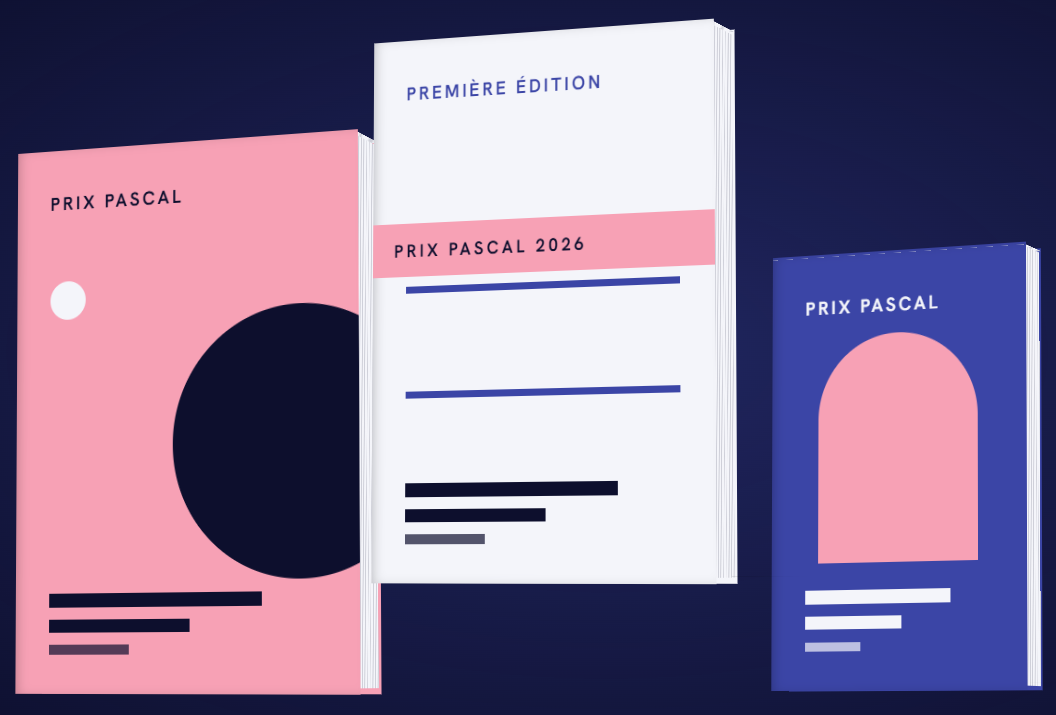
This sordid story did not escape the eyes of France's intelligentsia. Three French technology entrepreneurs, Philippe Rodriguez, Albin Serviant and Gilles Mentré, quickly developed an alternative prize to the Goncourt. They named it the Pascal Prize after the 17th century mathematician and philosopher Blaise Pascal. What Pascal has to do with AI is unclear. The prize is to be given to the writer of a manuscript that is co-written by a human and AI. This would cover almost everything thought of as AI writing as it is unlikely that a claimed author didn't contribute at least a word or two.
Being French, the prize is open to anyone in the French-speaking world who writes in French, regardless of residence or nationality. They can't already have a publisher, but they will publish the winning work. The winning work will be selected by a jury of five writers, critics, publishers, philosophers and journalists. It should be about 300,000 characters long, whatever that comes to in pages. You will need to name which AI program you use. You can apply here: https://prixpascal.fr/candidatures. The deadline is November 30.
The prize creators are more involved in technology than literature, but they make it clear “this prize is not a technology competition.”
AI is now used to translate works, but I don't know if it is acceptable for a human to write the entire book in a different language and then have AI cooperate by translating it to French. My guess is they would not take kindly to this idea, as many don't take kindly to the idea of having AI write books. Either way, you need to be part of the French-speaking world.
What is not clear to me is how serious this trio is. Is this a serious prize by people who truly appreciate the intersection of human and artificial intelligence, or some sort of a joke, perhaps by people with a more scientific, logical mindset making fun of the mess AI has created for the more artistic types? It does certainly point out some of the problems AI is creating for humans, and we have only scratched the surface. Whether this all leads to the machines killing us, or a benevolent partnership with them is unknown to me and anyone else at this time. We have to wait and see. As Doris Day so wisely taught us 70 years ago, Que Sera, Sera, Whatever Will Be, Will Be.