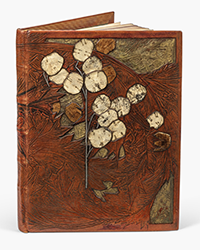
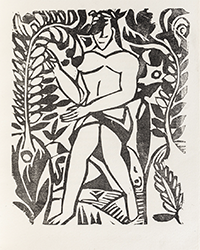
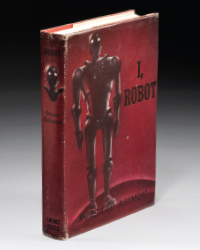
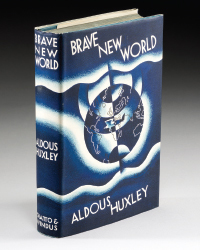
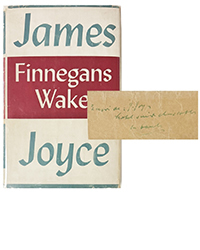
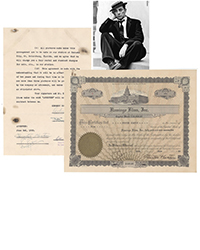
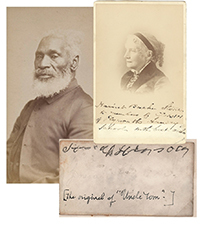
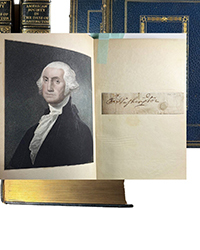
It seems like Brian Cassidy, 53, has been on my radar forever. Sure enough, when I looked in the files I found emails going back to 2010. In those days he was Brian Cassidy Bookseller, his own firm with an emphasis on counter cultural material. More recently, he partnered with Rebecca Romney to open Type Punch Matrix (TPM), a rare and antiquarian book dealer in Silver Spring, MD.
Though Cassidy and Romney come from opposite ends of the book world, they do have overlapping tastes and rely on each other’s expertise, especially when it comes to buying. Of the two, she is the better known: her media presence is only a few clicks away on Instagram, TikTok videos, Pawn Stars appearances, on-line commentary and wide ranging blogs, not to mention her most recent book, Jane Austen’s Bookshelf, published by Simon & Schuster.
But, he’s the one I’ve been following for years. In a recent phone conversation
it was fascinating to hear details of his latest incarnation as a high-end dealer, with something for everyone at price points from $25 to $375,000.
The way he described their enterprise was equal parts kismet and post-pandemic Plan B. The original idea was to start a gallery in Washington, DC, but along came Covid and everyone was in quarantine for the foreseeable future. Unfazed, they combined their wide ranging knowledge and many idiosyncratic specialties and opened up in 2019.
One of Cassidy’s own specialties is the “mimeo revolution,” which he defined as a “broad term for small magazine and small press press efforts after WWII.” To him the term includes offset, letter press, mimeo, and self published work produced by artists and writers like Wallace Berman and Ed Sanders. “The “mimeo revolution” is primarily a post war phenomenon,” he said. “It gained traction in the mid-century. Cassidy has also specialized in ‘zines. He described the mimeo revolution as “‘zine adjacent.”
Cassidy is a faculty member at the University of Virginia’s Rare Book School, where he
teaches about duplicating technologies with an emphasis on properly identifying duplication methods.
He is also the guy who lists among his interests: beats; folk vernacular and outsider books; punk/new wave/electronic; small press poetry, and artist books along with sex and smut. “In a way,” he commented, “most major cultural trends do show up eventually as sleaze.”
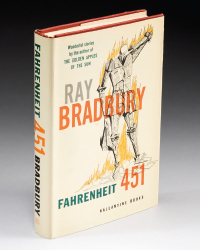
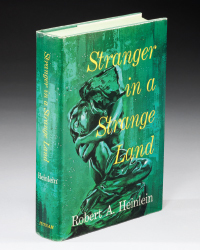
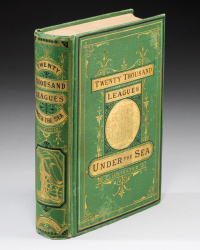
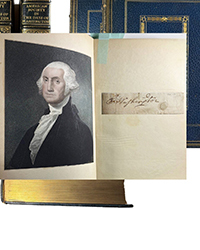
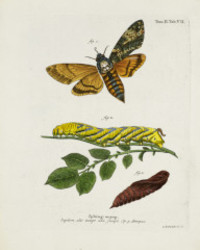
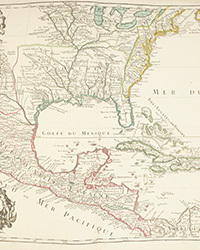
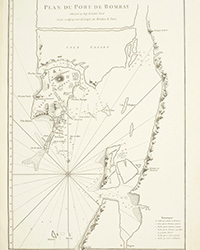
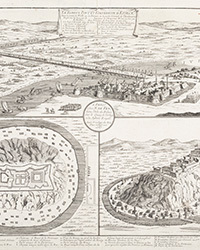
According to Cassidy, TPM has an inventory of about 6,000 cataloged books and another 3,000 uncataloged, plus a reference shelf of about 3,000 volumes. In late 2020 the company acquired the inventory of Aleph-Bet children’s books which represents about half of what’s on the shelves and a third of the value of the stock. They are open by appointment with a staff of four.
Cassidy observed that despite “swimming upstream” post-2020, “things in general are going well.” TPM has issued its ninth print catalog and continues to produce weekly e-lists. “We’re happy where we are,” he said, noting that he and his partner are very business minded. “Yes, we definitely look at the numbers,” he said.
I had erroneously assumed that their clientele was mostly HNWI (high net worth individuals), but I was wrong.
Cassidy named libraries and schools as a major part of their business and observed, “There is a lot more caution in the institutional market now. There are very few institutions whose budgets haven’t been impacted by current events and the decline in foreign student enrollment. Even so, he mentioned the company had recently sold a James Baldwin collection to Cornell for six figures.
Where does he see the market now?
“Whether institutional or private,” he said, “interest continues to be strong in science, Americana, Black studies, and high spot collecting. It's exactly where you think it would be ... No matter what your interests are, there is a way to collect printed material.”
He characterized TPM’s clientele as “curious and enthusiastic with interests all over the place. They are collecting less as trophy hunting and more as recreation. They see it as a reprieve, fun, interesting, and diverting.”
Though the TPM website mentions that the firm also buys books, “In reality,” he said, “we say ‘No’ to 99 percent of what we’re offered for a variety of reasons: We say ‘No’ to family Bibles, bad condition, incomplete, no dust jackets and the like. The books we buy are representative of our stock, interesting and important books in all fields.”
Since I’d always considered him an authority on Beat literature I was curious if he thought the genre would make it through the 21st century with the same impact these writers had shown in the last century?
Cassidy seemed to think they would. He made the distinction between readers and collectors. For readers this genre is “enormously popular,” although he acknowledged there may not be quite as many really high end buyers as in the past. His own prediction was that William S. Burroughs would be the Beat writer who would endure the longest and be considered the “most prescient.”
Currently TPM’s most expensive offering is a carbon typescript of Ginsberg’s Howl with an asking price $375,000. The catalog entry describes it as “a cornerstone of the Beat movement and (it) remains Ginsberg's most enduring work.”
Feeling flush? One of their more interesting current collections is all 24 novels in the Tarzan series by Edgar Rice Burroughs dated from 1914 to 1965 including Tarzan of the Apes in the rare original dust jacket and five inscribed books — along with Burroughs's rare 1917 autobiography and two further Tarzan titles listed at $125,000.
A little farther down the food chain is Raymond Chandler’s own copy of Trader Vic’s 1948 Bartender’s Guide with Chandler’s stamp and special notes on the gimlet: a central element of the plot, setting, and symbolism of his last great work, The Long Goodbye. Add the Philip Marlowe Gimlet to your collection for $15,000.
Browsing the inventory at the other end of the price scale I saw an interesting array of pop-up books including some by well known paper engineer Robert Sabuda and others. Many were priced under $50.
Cassidy said the company continues to exhibit at the ABAA’s Boston and NYC Armory Book Fairs. “Those are the two absolutes, sometimes we squeeze in a smaller one along the way.”
“The change in book fair demographic is real and noticeable,” he observed, “and now trending toward a younger and more diverse clientele than in the past.” He attributed the new blood to cultural shifts and to “the hard work of many people.”
He also noted that the Rare Books School at the University of Virginia is seeing more early stage professionals such as librarian and archivists and that dealers and prospective dealers continue to flock to CABS (formerly the Colorado Antiquarian Book Seminar) now known as CABS-Minnesota and located annually on the campus of St. Olaf’s College in Northfield, MN.
Type Punch Matrix business hours are Mon.- Fri., 10-6 EST. Visit by appointment on the top floor of the former American Instrument Company (AMINCO) complex at:
1111 East West Highway
Third Floor
Silver Spring, MD 20910
https://www.typepunchmatrix.com/
See their catalogs and elists at https://www.typepunchmatrix.com/catalogues.php
Their catalogs can be viewed online where it is easier to navigate to other parts of their site, or as pdfs, which display their wares with a real graphic flair. Hard copy printed catalogs are also available on request.
Phone: 301-589-0789 Land line Email: info@typepunchmatrix.com