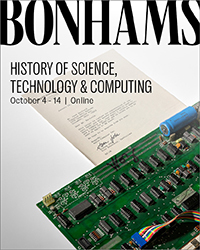
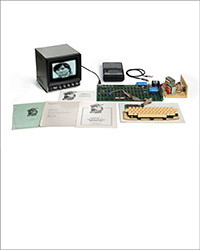
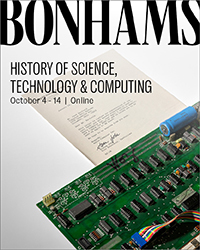
Bonhams, Now thru Oct. 14: The "Hatfield" Apple-1 Computer in working condition, signed by Steve Wozniak with a letter signed by Steve Jobs. Estimate: $500,000-800,000
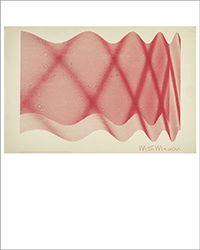
Bonhams, Now thru Oct. 14: REICHARDT, JASIA; curator. Cybernetic Serendipity: The computer and the Arts. Portfolio and Catalogue. Estimate: $5,000-8,000
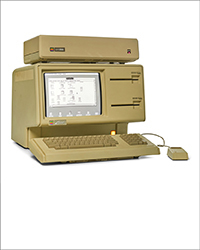
Bonhams, Now thru Oct. 14: An Apple Lisa 1 Microcomputer. Estimate: $50,000-70,000
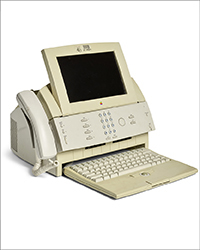
Bonhams, Now thru Oct. 14: A rare Apple Paladin "All-In-One" computer prototype. Estimate: $40,000-60,000
Bonhams, Now thru Oct. 14: 30th Anniversary "White OC" Edition Asus ROG Nvidia Astral Gegorce RTX 5090 signed by Jensen Huang. Estimate: $10,000-15,000
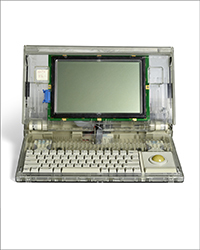
Bonhams, Now thru Oct. 14: A clear plastic prototype Apple Macintosh Portable. Estimate: $10,000-15,000
Bonhams, Now thru Oct. 14: An Apple Jolly Roger pirate flag. Estimate: $4,000-6,000
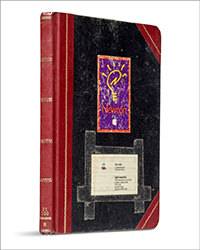
Bonhams, Now thru Oct. 14: An Apple Newton messagepad engineering development notebook. Estimate: $4,000-6,000
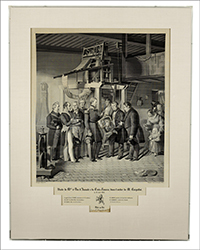
Bonhams, Now thru Oct. 14: A rare 1839 Jacquard-woven silk portrait of Joseph-Marie Jacquard. Estimate: $4,000-6,000
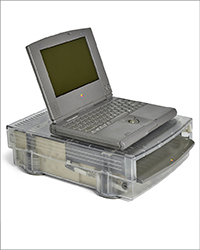
Bonhams, Now thru Oct. 14: A clear plastic prototype Apple Macintosh Powerbook Duo dock with an Apple Powerbook Duo 280. Estimate: $3,000-4,000
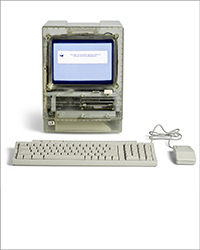
Bonhams, Now thru Oct. 14: A clear plastic prototype Macintosh 'Apollo' Classic II. Estimate: $3,000-5,000
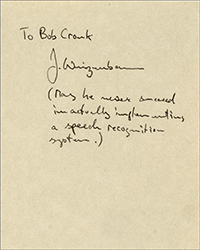
Bonhams, Now thru Oct. 14: WEIZENBAUM. Computer Power and Human Reason. 1976. Estimate: $1,500-2,500
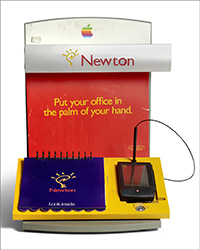
Bonhams, Now thru Oct. 14: An Apple Newton Messagepad with marketing display. Estimate: $1,000 - 1,500
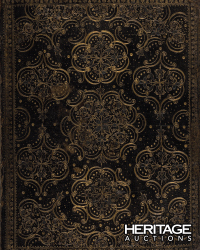
Heritage Auctions, Oct. 14: Bible, in English. Fine restoration binding in the style of the Queen’s binders.
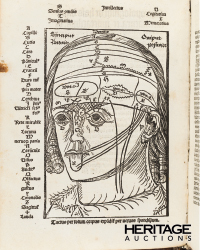
Heritage Auctions, Oct. 14: Magnus Hundt, the elder. First edition of one of the earliest printed books with anatomical illustrations.
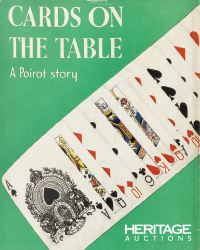
Heritage Auctions, Oct. 14: Agatha Christie. Cards on the Table. First edition.
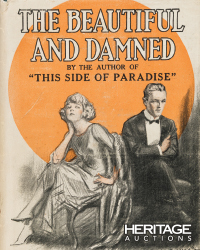
Heritage Auctions, Oct. 14: F. Scott Fitzgerald. The Beautiful and Damned. First edition, first printing.
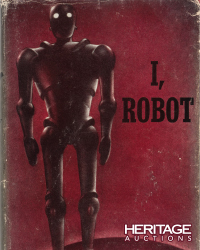
Heritage Auctions, Oct. 14: Isaac Asimov. I, Robot. First edition, presentation copy.
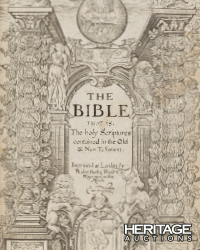
Heritage Auctions, Oct. 14: Bible, in English. Geneva-Tomson-Junius. London: Robert Barker, [colophon 1612]/1611.
The World is Still Changing: Tradition and Technology in the Rare Book Trade
- by Bruce E. McKinney
Change is our constant
Book fairs have long played an important role in the rare book field. We date the beginning of printing with Gutenberg’s invention of the printing press circa 1450. Less known is the first book fair was the Frankfurt Book Fair in 1462. In 1564 the first book fair catalogue (Messkatalog) provided an organized listing of show material. In America Mathew Carey organized the first Literary Fair in New York in 1802.
With the emergence of literacy, the development of faster presses and pulped paper in the 19th century, collectable paper became a more widely followed field. Auctions and dealers made scale possible. After WWII, ILAB and soon after, the ABAA established standards. Soon after, their book fairs became significant events for both buyers and sellers.
From the early 19th century, auctions provided wholesale functionality for dealers. Late in the 20th century, auctions entered the retail market.
By 2000, the field was already transitioning to rely on aggregated listing sites that made it quickly obvious what was rare and valuable. Agreement as to fair value was left to sellers to post their prices. It encouraged higher prices, that encouraged more sellers to list. Soon it became apparent when the number of equal or better copies posted reached 6, it stalled sales, opening the door wide for auction houses to break the logjam. Overpriced online listings became the ticket to their success. Last year almost 4,000 collectible paper auctions sold more than $1.230 billion dollars of this material (all documented on Rare Book Hub).
Now the field is adjusting to a new reality. eCatalogues (for dealers, collectors and institutions) are starting to function like auction catalogues. If their material is described well, illustrated with images, and priced correctly, the material flies out the door. If inappropriately priced, well, they’ll continue to be available until their eCatalogues disappear. One way or the other the market learns. For Rare Book Hub’s paid subscribers it is a free additional service for them. Think of it as a quasi-auction format. The world is changing.
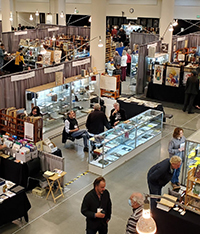
And how do shows fit in? Book fairs have always enjoyed a traditional book-oriented following. With the surge of interest in ephemera, person to person events is an ideal way to introduce and educate new and casual collectors. For those fresh to the scene, collectible paper is a surprisingly accessible game where their initially limited funds can be converted into many interesting examples. Equally important for dealers, these new client’s interest in ephemera will encourage their futures. The book field has long been a strong magnet for those who love history and paper. Ephemera will soon be the drug of choice.
For new collectors, book fairs that encourage ephemera deserve a much larger audience. For the fresh faces, it’s at the fairs they will see the players, and then go home thinking, I can be one of them. It’s the future of collectible paper.
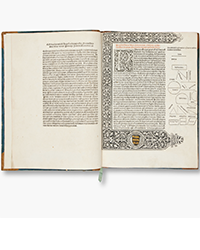
Sotheby’s, Oct. 20: Euclid. Praeclarissimus Liber Elementorum in Artem Geometrie, Venice, Ratdolt, 25 May 1482, first edition of the first substantial mathematical work to appear in print, Durazzo copy.
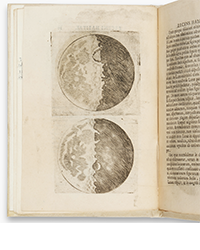
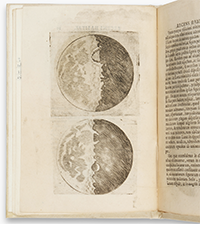
Sotheby’s, Oct. 20: Galilei, Galileo. Sidereus nuncius …, Venice, 1610, first edition of the foundation of modern astronomy.
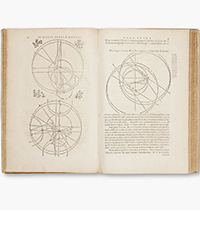
Sotheby’s, Oct. 20: Kepler, Johannes. Astronomia nova aitiologitos …, Prague or Heidelberg, 1609, first edition, contemporary vellum, the Chasles copy.
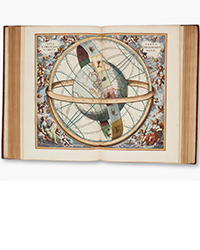
Sotheby’s, Oct. 20: Cellarius, Andreas. Harmonia macrocosmica seu atlas universalis et novus ..., Amsterdam, Jan Jansson, 1661, brilliantly handcolored.
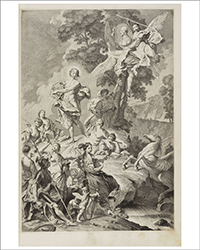
Bonhams, Now thru Oct. 15: TASSO. La Gerusalemme Liberata. 1745. Estimate: $15,000-25,000
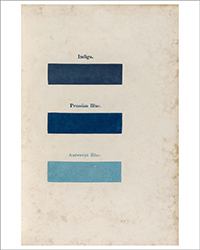
Bonhams, Now thru Oct. 15: SAVAGE. Practical Hints on Decorative Printing... 1822. Estimate: $8,000-12,000
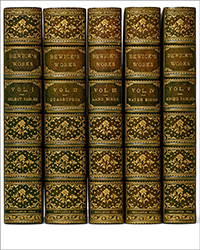
Bonhams, Now thru Oct. 15: BEWICK. The Works... [1805-]1822. Estimate: $8.000-12,000
Bonhams, Now thru Oct. 15: RÖSEL VON ROSENHOF. De natuurlyke historie der insecten... [1765–1788]. Estimate: $8.000-12,000
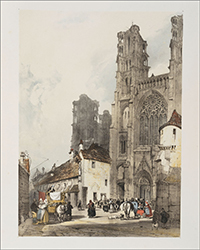
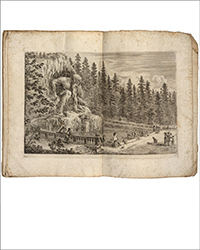
Bonhams, Now thru Oct. 15: BOYS. Picturesque Architecture in Paris, Ghent, Antwerp, Rouen, etc. [1839]. Estimate: $8,000-12,000
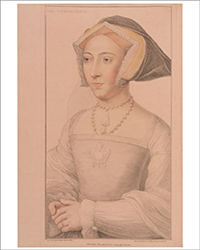
Bonhams, Now thru Oct. 15: HOLBEIN. Imitations of Original Drawings by Hans Holbein... 1792[-1800]. Estimate: $8.000-12,000