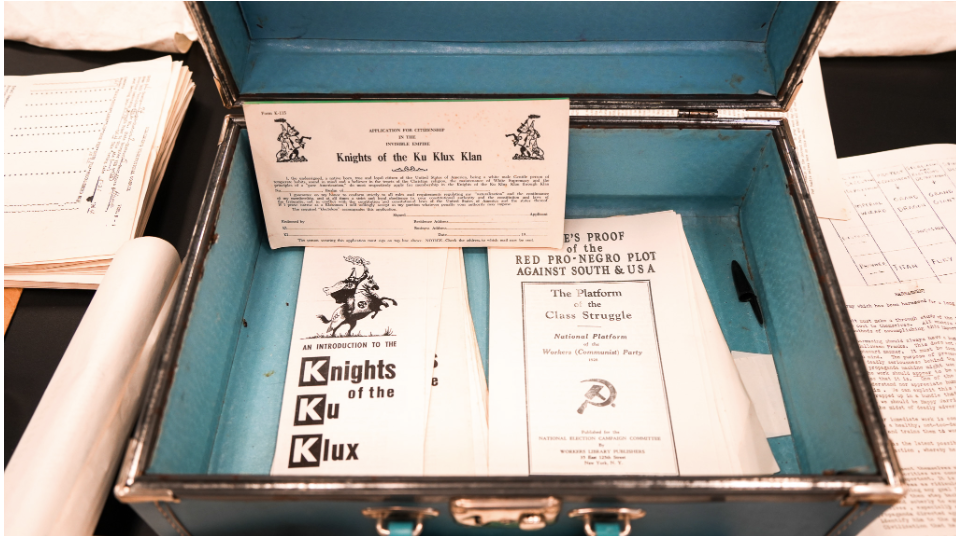
An archive relating to a difficult time in American history was recently discovered in a small suitcase at the Mississippi Department of Public Safety. The MDPS is planning on moving to new quarters and the suitcase was found while cleaning out a closet. It contained a collection of material created by the Ku Klux Klan in the 1960s and '70s. It is ugly, racist and hateful, with overtones of violence. Why it was there is is unknown, but there is some speculation it might have been gathered by an FBI informant working there at the time.
It is necessary to set the scene to understand the significance of this material. It sounds like it was written by crackpots and it was, but these crackpots had a lot of power then, even if they were a minority. They had enough strength to be intimidating and threatening. While state police generally were more even-handed, local police often aided the KKK in its violence. The Supreme Court's Brown vs. Board of Education ruling outlawed segregated schools, but it wasn't until the 1960s that real integration began, mainly by force of the federal government. There were riots with two killed when the Feds forced the entrance of black student James Meredith into the University of Mississippi. In 1963, civil rights leader Medgar Evers was assassinated. Down the road that year was the Klansmen bombing of a church in Alabama that killed three girls. In 1964, Philadelphia Mississippi became the most famous Philadelphia in America with the killing of three civil rights workers, James Chaney, Andrew Goodman, and Michael Schwerner, by members of the Klan. They were shot and buried in an earthen dam. Put in their context, these documents become even more horrifying than just their written words.
Among the KKK-related items, according to the MDPS, were “charters, a spiral notebook with meeting minutes, a ledger book, a 1964 Imperial Executive Order and numerous pamphlets. There is also Klan propaganda material, including a pamphlet entitled, 'The Ugly Truth about Martin Luther King,' published by United Klans of America.” King was slandered with the all-too-common smear used against people you don't like of being a communist. A piece headed “Aims of Red Pro-Negro Plot” mentions such horrors as “To promote racial mixing to mongrelize the white race and weaken the U.S...To overthrow the U.S. Republic by use of propaganda, infiltration, subversion, dissension - and violence if necessary.” Ironic, as that is what the KKK was doing. “Reds to take over control of America.”
Other items included “The Klan Kreed,” a combination of biblical quotes and warnings of a battle between themselves and the communists. For good measure, “We believe there can be no compromise on the matter of segregation of the Races.” There is a listing of “Fifty Reasons Why You Should Be a Member of the Ku Klux Klan by Imperial Wizard R. E. Davis.” Among these are, “Because it is the only organization on earth where only native-born, White, Gentile American citizens make up its membership, it believes in and fights for White Supremacy, Because it stands for segregated schools, NOW and ALWAYS!, Because it is opposed to intermarriages between niggers and White people, Because it believes the White race is God's race through which He wants to maintain a just civilization, Because it believes that Judaism is not the religion of the Bible, but that it is a set of principles for the purpose of elevating the Christless Jew beyond the White races, Because it is opposed forcing defenseless children to have nigger playmates, Because it teaches that men should love their own wives and let the other fellows alone, and Because it is unalterably opposed to the Zionist Jew programs.” Then there is my favorite reason for joining – “Because it is composed of HE men and not silly dilly humans.”
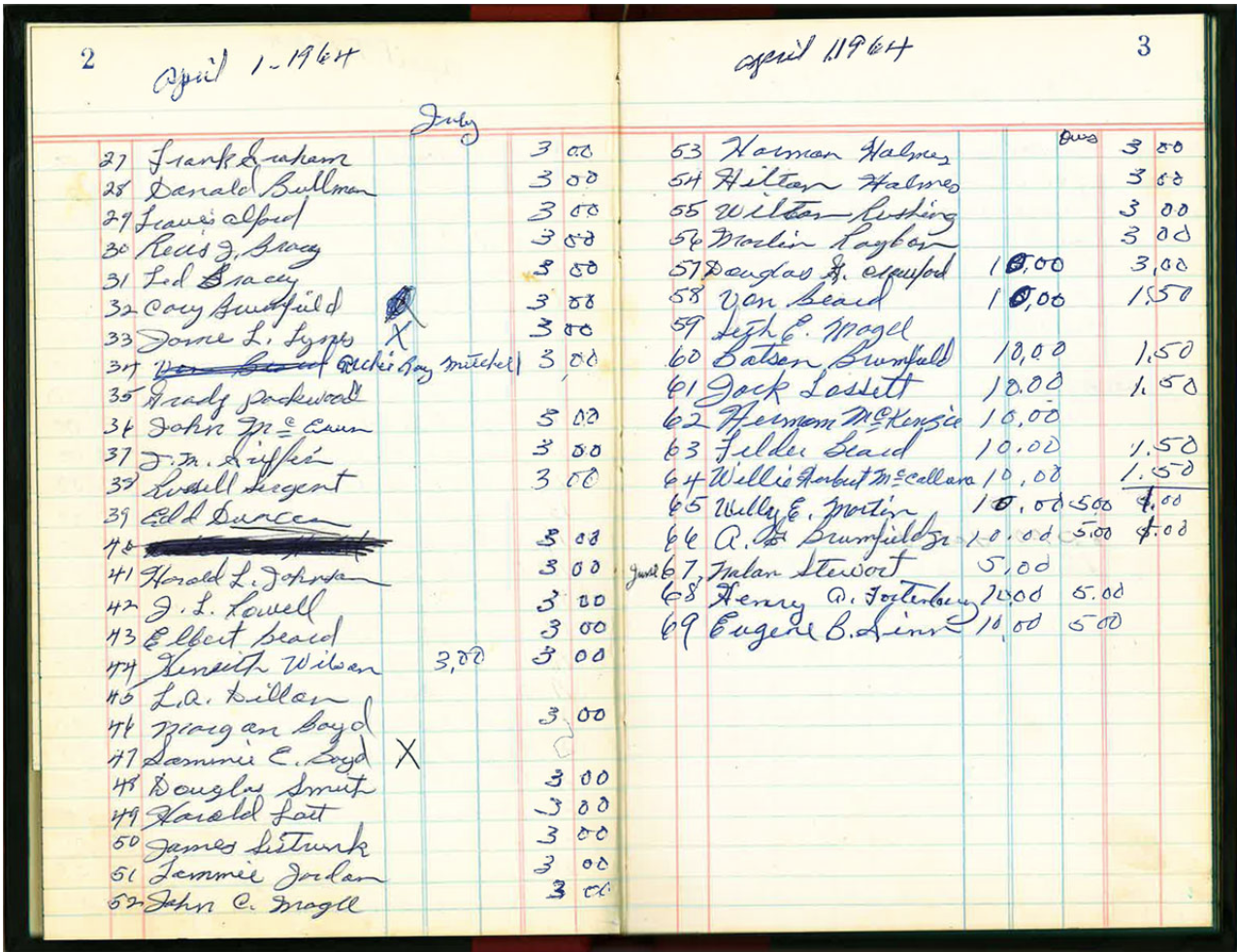
The documents avoid names. This is not unexpected for an organization where members hid their faces. But then, there is a ledger of members who have or have not paid their dues and the names are written out. There are probably still a few of them around today and they have now been outed. Undoubtedly, many have living descendants and they may not be happy to see this list. Then again, there are still some unredeemed Klansmen who are perversely proud of their association.
Finally there is the piece de resistance, a Klan robe and mask.
Also discovered were news clippings about the Mississippi Highway Patrol and Highway Patrol folders labeled “Communist Agitators” and “Freedom Riders.” The Freedom Riders were Northerners who took buses south to participate in protests. They were not welcomed by the locals, at least not those who were white.
MDPS Commissioner Sean Tindell said, “Mississippi Highway Patrol Troopers and Agents with the Mississippi Department of Public Safety have worked for decades with our federal law enforcement partners to shed light on the darkness in which groups like the Ku Klux Klan chose to operate. By preserving these artifacts and shedding light on such organizations, we help ensure that future generations are never led astray by such hate.”
This all seems long ago now. Less than 15% of the U.S. Population is old enough to remember any of it when it was happening and for many of those they were too young to really understand. The KKK still exists and they need to be monitored for potential violence, but the danger is relatively small. The members are something of an anachronism with little power. In the 1960s, the KKK was estimated to have close to 100,000 members in Mississippi. Even then they were no longer as strong as they had been in the Klan's heyday of the 1920s when they carried out lynchings. Nonetheless, they were still fearful, conducting cross burnings, violent attacks on institutions, and killings. These documents have now been transferred to the Department of Archives and History where they will be preserved, and in time digitized for all to read. It is important to know your history, the good, the bad, and the ugly.