I was prompted to write this short piece on H.P. Kraus (HP) and my relationship with him after reading the writer and bookseller Larry McMurtry's 2008 memoir, Books: A Memoir. Near the end, McMurtry mentions that he avoided discussing personal conflicts, otherwise he would not have had to ask questions such as: Was H.P. Kraus ever friendly? In truth, I think he should have asked, "Why was H.P. Kraus so spectacularly rude?" Few of us had much opportunity to judge HP’s friendliness.
Reading that made me realize how few people are left who truly knew him, and how extraordinary his life was—not just as a titan of the book trade. He was difficult, but in our relationship, he was like a father to me. I will try to remain objective, not only because his parents were my father’s aunt and uncle, but because he paid for my entire education, employed me for nine years, and had me live with him for four of those years.
Starting at age 12, during his frequent visits to London, I was allowed to leave my boarding school on Sundays to go up to London with him. After a magnificent lunch at the Ritz—which always ended with him attempting to transfer as much of the dessert trolley onto my plate as possible—we would go for long walks in Green Park, where he regaled me with stories of his life and adventures in bookselling. He initially wanted to take me to the cinema or theater, but in an era governed by the Lord's Day Observance Society, our park strolls were the only permitted activity.
When I was 16, he took me to my first auction. Between that thrill and the tales from our Sunday walks, I was hooked. So when he asked what I wanted to be when I grew up, I didn't hesitate: "A bookseller."
HP replied that was fine, but if I wanted to work for him, I could not go to university. "University," he told me, "is where you learn a lot about a little. To be a bookseller, you need to know a little about a lot."
From Vienna to New York
When I reflect on his life, I feel it is perfectly encapsulated by two photographs in his autobiography, A Rare Book Saga. The first, taken before World War I at the family country house on Lake Wolfgang in Austria, shows the Kraus family exuding middle-class prosperity. The second photo, taken some 70 years later, shows the family at their country home in Ridgefield, Connecticut, in a nearly identical pose. What transpired between those two frames is astounding.
The early prosperity ended abruptly with the premature death of HP's father, Emil, a successful doctor. Despite his grandmother, Wilhelmina Rix, building a cosmetics empire after being widowed, money suddenly ran tight. HP decided to turn a shared love of books into a livelihood. He secured an apprenticeship at Lechner's, an established Viennese bookstore, starting at the bottom by sweeping floors. Later, he worked as a traveling salesman for scholarly texts across Eastern Europe—a foundation that underpinned his future commercial success.
In 1932, he opened his own shop in his grandmother's grand house on Praterstrasse. It flourished quickly, allowing him to hire staff. His first employee was a German named Alfred Wolf. Shortly after the Nazi annexation of Austria, Wolf betrayed HP in exchange for taking control of the business. In 1938, HP was arrested and imprisoned in Dachau, and later transferred to Buchenwald.
Miraculously, after eight months in the camps, he was released and managed to escape to New York via Sweden in 1939. During our after-dinner walks years later, he would occasionally recount horrifying glimpses of that period, such as watching fellow prisoners executed for minor infractions. To survive Dachau and Buchenwald left permanent scars. He was unimaginably fortunate to escape, but I firmly believe he never truly got over the betrayal by his employee. That he managed to rebuild his life after such trauma is a minor miracle.
Arriving in New York virtually penniless and with limited English, he started anew. Though he eventually mastered the language, he remained self-conscious about his accent to his dying day and preferred speaking German.
Two weeks after landing in New York, his fortunes turned when he met Hanni Zucker, the daughter of a wealthy textile manufacturer who had wisely left Europe in 1937 with his fortune intact. Suddenly, HP had both a life partner and business backing. Together, they raised five children and built the world's preeminent rare book firm.
Though his father-in-law initially wanted HP to join the textile business, HP stood firm. Mr. Zucker graciously accepted defeat and provided seed money for the new book enterprise. Combining a razor-sharp instinct for rare items, unbounded ambition, and an astounding memory, HP began acquiring inventory. By 1945, he purchased the five-story townhouse at 16 East 46th Street, which served as the firm’s iconic headquarters for decades.
HP’s vision was unmatched. In 1946, he hired a fellow Viennese refugee, Fred Altman, to launch a scientific periodicals division. The venture exploded, expanding into reprinting and building massive warehouses and offices in Liechtenstein and Upstate New York. When he sold a 51% stake to Lord Thomson of Fleet in 1965 for millions, the deal provided financial security and immense personal pride. Crucially, the periodical empire generated steady cash flow, freeing HP from any pressure to compromise when buying or selling rare books.
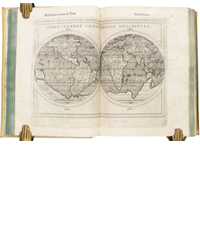
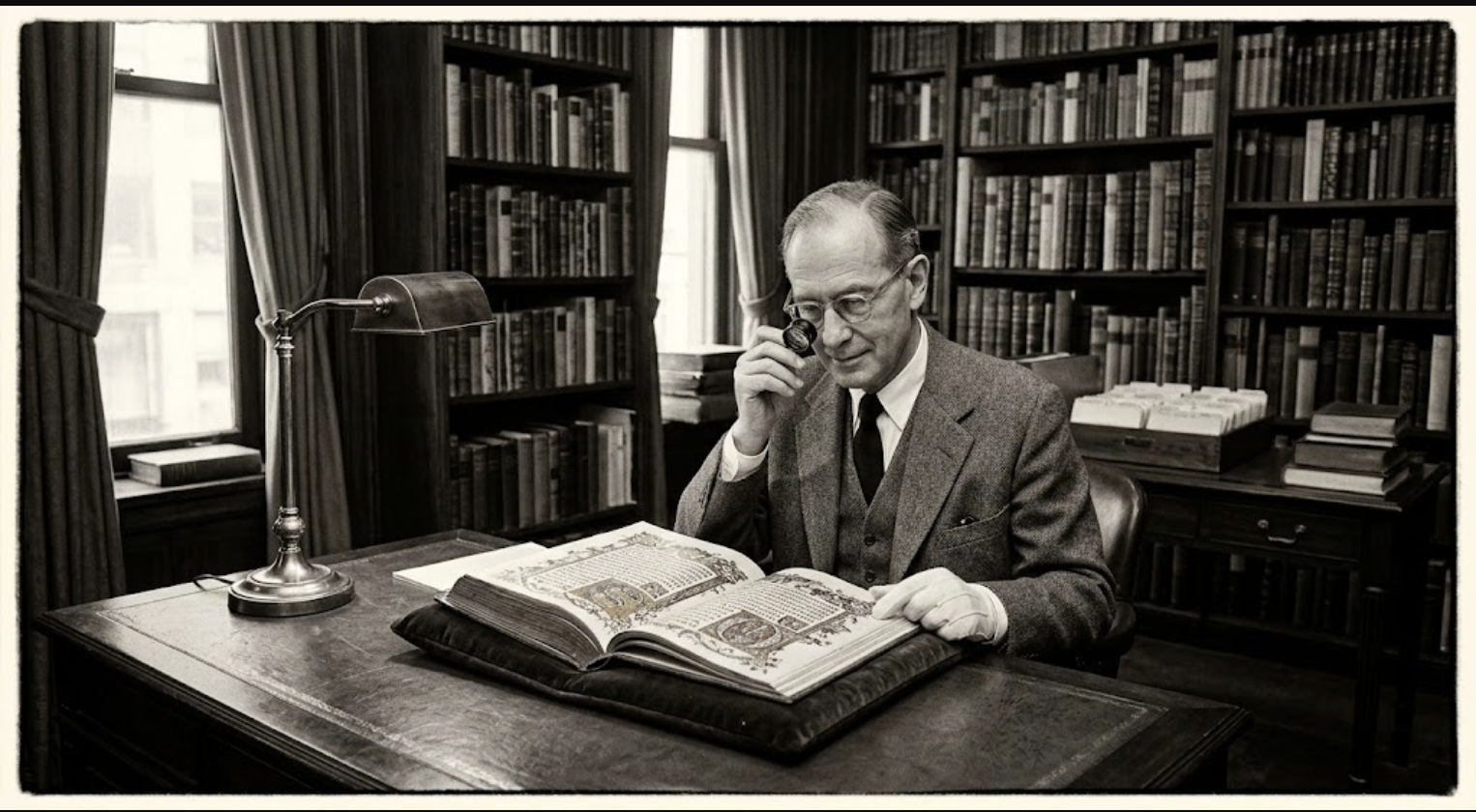
He assembled a brilliant team of catalogers, established the finest private reference library in the trade, and kept an in-house bookbinder. Beyond printed books, HP became the world's premier dealer in illuminated medieval manuscripts—a field demanding an extraordinary eye and deep scholarly knowledge.
Life on the Inside
Working for HP offered endless, unforgettable experiences. In 1967, he sent me to my first international auction in Utrecht, instructing me to bid under a pseudonym so no one would recognize the firm. The auctioneer assigned me the alias "Smith." I won one of the early lots, and when the hammer fell to the name "Smith," the room burst into laughter; I wished the floor would swallow me whole.
On another assignment, he sent me to Upperville, Virginia, to spend two days cataloging treasures owned by Paul Mellon. One room held original wax sculptures by Degas; another featured sliding racks filled with Impressionist masterpieces now housed in the National Gallery. The library held cupboards of Caxtons and Major Abbey’s legendary collection of English color-plate books.
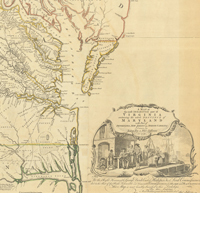
HP also loved sending me on sales calls carrying treasures far beyond the prospects' budgets. I was dispatched to Harvard carrying the original manuscript of the Harvard Charter, and to Australia with one of two surviving copies of the first known map of the continent. Both were astronomically expensive, but the rejections were always polite.
Then there was his notorious rudeness. Whenever we visited other bookshops, he would demand to see the owner’s finest item. Upon seeing the prize, he had two typical responses: either "I asked to see your BEST book," or a sneering, "THIS is your best book?"
I experienced his bluntness firsthand when my future wife, Evi, and I sat in his garden to announce our engagement. HP turned directly to Evi and asked, "Are you pregnant?" Before she could answer, he added, "Does she have money? You have to marry for money. I did"—all while sitting right next to his wife, Hanni. One simply had to learn to laugh it off.
Yet the scale of his achievement was staggering. To go from sweeping bookstore floors in Vienna to owning a Gutenberg Bible, by way of Dachau and Buchenwald, is almost incomprehensible.
When I first joined 16 East 46th Street in 1964, an original Elephant Folio of Audubon’s Birds of America greeted visitors. While modern first editions weren't his focus, a copy of James Joyce's Ulysses in its original blue wrappers sat right outside his office. At home, he held an unmatched collection of modern illustrated books, largely acquired from collector Daniel Sickles. Studying those volumes inspired the specialty I later pursued in my own business.
Being around HP also meant joining his box at the Metropolitan Opera. He would sit in the back row with me, grumbling about paying for the box only to get the worst view. On one memorable night, he arrived late for the first intermission and casually announced that he had just come from the bank, where he had finalized purchasing Arthur Houghton’s copy of the Gutenberg Bible.
A Lasting Legacy
Beyond the rare volumes, HP was surrounded by a legendary network of collectors, librarians, and fellow dealers. That world became a priceless foundation when I stepped out on my own.
On my final day, HP invited me to lunch in the dining room upstairs. As we finished, he asked what I intended to name my new firm.
"Peter Kraus," I replied.
He glared at me. "There is only room for one bookseller named Kraus in this world. If you persist with 'Peter Kraus,' I will destroy you. Choose any other name, and you will have my unstinting support."
It didn't take me long to decide, and I enjoyed his generous support for the rest of his life.
H.P. Kraus was a complex, sharp, and often difficult man. But he built a rare book enterprise the likes of which the world will never see again. More than that, he gave me a family, a home, and a lifelong career surrounded by extraordinary books.
My final memory of HPK is running into him outside the Carlyle Hotel in Manhattan, where I had opened my shop. He looked at me, smiled, and said simply: "Peter, I am really proud of you."
Nothing could have made me happier.